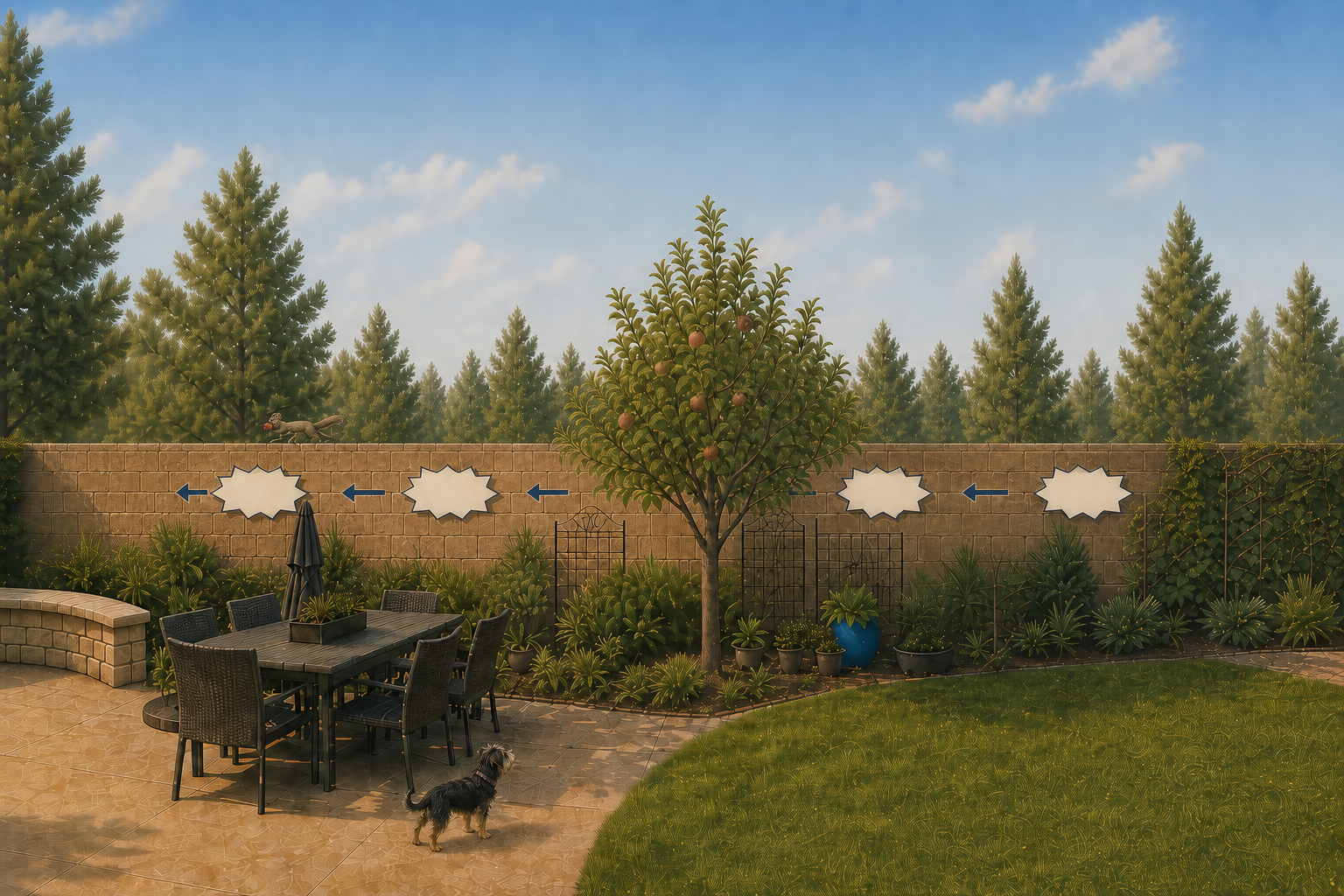
This illustrated guide is for readers looking for Kafka for kids, Kafka for children, or Kafka for beginners: a friendly first step into events, records, producers, consumers, topics, and replay.
Kafka is the pack’s Bark Line: a durable line of information running along the backyard wall. When something happens, a dog records it. The other dogs can use that record now—or come back and use it later.
What is Apache Kafka?
Apache Kafka is an event-streaming platform. Applications publish records describing things that happened, and other applications read those records. Kafka keeps the records in an ordered, durable stream so that many readers can react at their own pace.
An event is simply something that happened: an apple was taken, a payment completed, a package moved, or a sensor changed temperature. A record is the saved description of that event. Kafka gives those records somewhere dependable to go.
From a disappearing event to a durable record
A squirrel can leap onto the wall, grab an apple, and vanish in seconds. If the dogs rely only on what they happen to see, the useful information disappears with the squirrel. Eve solves that problem by producing a record:
APPLE TAKEN
MOVEMENT: LEFT
The squirrel’s movement is temporary. The record is durable. In a real system, a producer might be an application, checkout service, vehicle, database, or sensor. Eve plays that producer role in the story.
Kafka becomes the Bark Line
Eve publishes her record to the Bark Line. Ollie, Amira, Carter, and Kayla can all read it. That is the central Kafka pattern: producers write records; consumers read them.
The producer does not need to call every consumer directly. Eve does not run around the yard barking separately at four dogs. She publishes once. The Bark Line separates the source of the information from every system that might use it.
What is a Kafka topic?
A topic is a named stream of related records. The pack might put backyard activity in an apple-events topic. A delivery company might have a package-events topic, while an online store could use an order-events topic.
Naming streams helps consumers subscribe to the information they need. Carter can focus on records that require enrichment. Kayla can focus on the completed information used for decisions.
Records stay in order
Sequence matters. “Apple taken” followed by “apple dropped” tells a different story than the reverse. Kafka partitions topics into ordered logs. Inside a partition, each new record receives a position, called an offset, that consumers use to track their progress.
Movement left2 Apple dropped
Movement down3 Apple taken
Movement left
Read now or replay later
Kafka does not normally erase a record the instant one consumer reads it. Records remain available according to the topic’s retention settings. A consumer can process new events in real time, restart after a failure, or replay earlier events to rebuild a result.
In the story, the dogs can react to the Bark Line immediately or ignore a message and use it again later. Replay is one reason Kafka is useful for audit trails, event-driven systems, data pipelines, and stream processing.
What Kafka does—and does not do
Kafka moves and retains records extremely well, but it does not automatically understand that “movement left” came from a monarch butterfly rather than a squirrel. Carrying information is different from interpreting it.
That is where a stream processor enters the story. Apache Flink reads the Bark Line and adds the missing clues. Kafka supplies the durable stream; Flink transforms and enriches it.
The analogy in one minute
- Backyard activity
- Events happening in the real world
- Eve
- A producer publishing event records
- The Bark Line
- A Kafka topic carrying durable records
- The other dogs
- Consumers using the stream
- Reading an old message
- Replaying retained records
Where the analogy stops
A real Kafka deployment includes brokers, partitions, replication, offsets, consumer groups, security, monitoring, and operational choices. A Bark Line cannot explain every detail. Its job is to make the essential shape memorable: record what happened, publish it once, retain it durably, and let multiple consumers use it.